What the early work taught us
Immersive Smile did not begin as a finished pediatric platform. The dissertation records early VR exploration during adult cystoscopy and feedback asking for more interaction. These were small exploratory observations, not a controlled comparison between adult and pediatric effectiveness.
From watching to doing
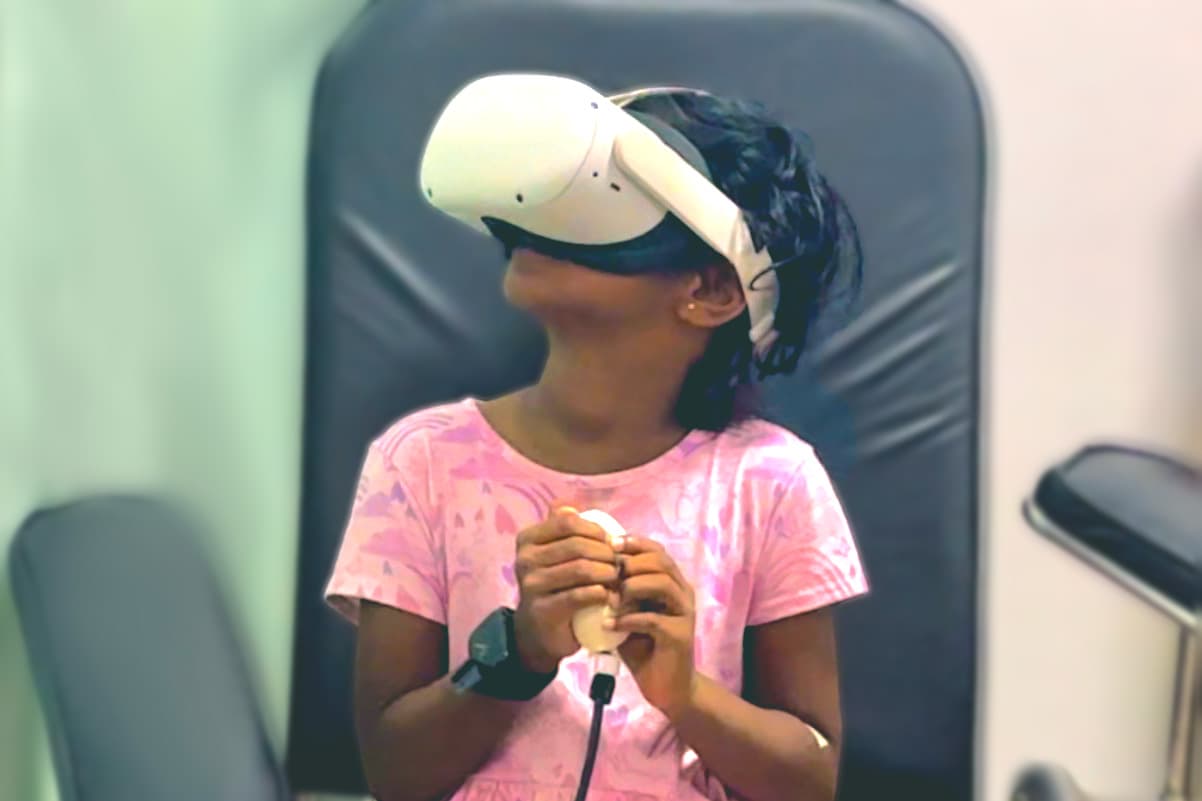
The design question changed from what a patient should see to what the patient could do. Pediatric prototypes explored physical interaction and engaging environments. Feedback helped shape the later research question.
From interaction to responsiveness
The work brought together tactile input, contextual physiological information and an adaptive VR approach. The aim was not to add AI for its own sake, but to investigate whether a responsive experience differed from static VR.
From prototype to evaluation
The resulting randomized venipuncture comparison involved fifty participants. The research was published in Springer Nature conference proceedings in 2026. Current product development builds on this work while maintaining a distinction between the studied prototype and new configurations.
The next chapter
New procedures should earn their own evidence. We welcome hospitals and research teams interested in evaluating practical fit and defining new questions—not simply repeating the same claim in a new setting.